Dividend Meaning:
Understanding How Dividends Work
And How To Profit From Them
 Imagine your friend Jo owns "Crumbs & Co.", a little shop that makes the finest Victoria sponge in town. One day Jo asks if you'd like to buy a 10% share in her bakery.
You hand over some cash, and in return you own a slice of the business literally and figuratively.
Over the year, Crumbs & Co. Does brilliantly. After paying for flour, butter, the electricity bill, and a new oven, the bakery makes a £10,000 profit.
Jo, being decent, decides to share a portion of that profit with the business owners. Because you own 10%, £1,000 lands in your bank account. That £1,000 is a dividend. No extra work, no kneading dough at 4a.m... Just cash for being an investor.
That's the dividend meaning stripped bare... a share of a company's profits, distributed to its shareholders.
Some companies pay them, some don't, and the amounts vary wildly. But the heart of it is that simple.
Now, scale that bakery up to a multinational, and you've got the same principle. The dividend meaning doesn't change just because the business has a fancy ticker symbol and an office in Canary Wharf.
It's still a profit-sharing mechanism your reward for providing capital.
Imagine your friend Jo owns "Crumbs & Co.", a little shop that makes the finest Victoria sponge in town. One day Jo asks if you'd like to buy a 10% share in her bakery.
You hand over some cash, and in return you own a slice of the business literally and figuratively.
Over the year, Crumbs & Co. Does brilliantly. After paying for flour, butter, the electricity bill, and a new oven, the bakery makes a £10,000 profit.
Jo, being decent, decides to share a portion of that profit with the business owners. Because you own 10%, £1,000 lands in your bank account. That £1,000 is a dividend. No extra work, no kneading dough at 4a.m... Just cash for being an investor.
That's the dividend meaning stripped bare... a share of a company's profits, distributed to its shareholders.
Some companies pay them, some don't, and the amounts vary wildly. But the heart of it is that simple.
Now, scale that bakery up to a multinational, and you've got the same principle. The dividend meaning doesn't change just because the business has a fancy ticker symbol and an office in Canary Wharf.
It's still a profit-sharing mechanism your reward for providing capital.
The Real Dividend Meaning: It's A Profit-Sharing Handshake
When you buy a share, you're not just hoping on a number going up. You become a part-owner of a real enterprise. The true dividend meaning isn't just a mechanical payment... It's a signal. It says, "We, the directors, believe this business generated genuine cash that we can't reinvest at high rates of return, so here's your cut." Think of it as a handshake between you and the company. You provide patience and capital... The company provides regular, tangible rewards. This meaning gets lost when people treat shares like ticker symbols, not ownership stakes.
Dividends remind us that behind every share certificate sits a living, breathing business that produces goods, serves customers, and if run well generates out free cash flow.
Understanding the dividend meaning also helps you separate solid companies from show ponies. A business that consistently pays and grows its dividend is essentially telling you, "Our profits are real, not accounting tricks."
Because you can't pay a cash dividend with artificial earnings. You need actual money in the bank.
So when you hear someone dismiss dividends as boring, smile. Boring, in the dividend world, often means reliable. And reliable means you sleep soundly while your portfolio quietly tops up your current account.
Think of it as a handshake between you and the company. You provide patience and capital... The company provides regular, tangible rewards. This meaning gets lost when people treat shares like ticker symbols, not ownership stakes.
Dividends remind us that behind every share certificate sits a living, breathing business that produces goods, serves customers, and if run well generates out free cash flow.
Understanding the dividend meaning also helps you separate solid companies from show ponies. A business that consistently pays and grows its dividend is essentially telling you, "Our profits are real, not accounting tricks."
Because you can't pay a cash dividend with artificial earnings. You need actual money in the bank.
So when you hear someone dismiss dividends as boring, smile. Boring, in the dividend world, often means reliable. And reliable means you sleep soundly while your portfolio quietly tops up your current account.
Why Do Companies Pay Dividends?
Newcomers often ask, "If a company is so profitable, why doesn't it just keep all the cash?" Excellent question, and answering it adds depth to the whole dividend meaning. Companies pay dividends for a few reasons...- They've run out of brilliant ideas. A mature company might have limited opportunities to reinvest profits at high returns. Once the business dominates its market, throwing more capital at expansion may be wasteful. Far better to return cash to shareholders.
- It signals financial health. A dividend commitment tells the world the company is confident about future cash flows. Cutting a dividend is often seen as a red flag, so boards treat payouts with enormous care.
- It attracts a different type of investor. Many pension funds and income-focused investors prefer dividend-paying shares. By paying a reliable shareholder payout, a company broadens its ownership base, which can stabilise the share price.
- Discipline. Knowing you must write dividend cheques every quarter forces management to be choosy with spending. It's challenging to fritter away cash on vanity projects when a chunk of profit is earmarked for investors.
Dividend Meaning vs. Capital Gains: The Two Ways Shares Make You Money
There are only two ways to profit from the stock market, and grasping both makes the dividend meaning even clearer. Capital Gains: You buy a share at £15, sell it later at £20. The £5 difference is a capital gain no dividends involved. Dividends: You hold the share, and the company periodically sends you cash from its profits. You might never sell the share at all, yet you still receive income.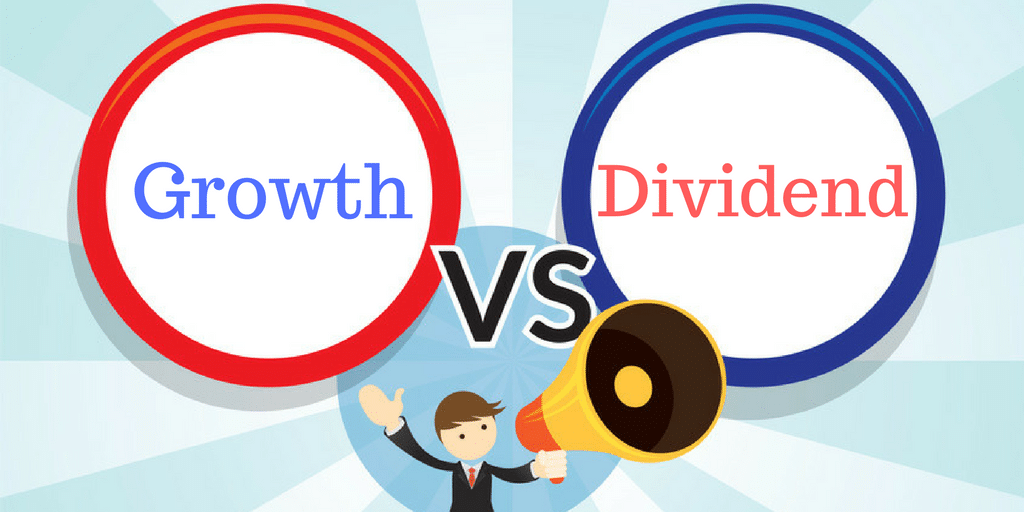 In an ideal world, you get both. A company grows its earnings, its share price rises, and it pays you a growing income stream along the way. That's the holy grail.
But here's the catch. Many beginners obsess over capital gains and completely ignore dividends. Yet, over the very long term, reinvested dividends have contributed a huge chunk of total stock market returns.
The dividend meaning isn't just about the 4% or 5% yield you see today... It's about the relentless accumulation of income over decades.
Think of capital gains as selling the bakery for a higher price later. Dividends are the slice of cake you get to eat every year while you wait. Both matter, but one tastes a lot sweeter along the journey.
In an ideal world, you get both. A company grows its earnings, its share price rises, and it pays you a growing income stream along the way. That's the holy grail.
But here's the catch. Many beginners obsess over capital gains and completely ignore dividends. Yet, over the very long term, reinvested dividends have contributed a huge chunk of total stock market returns.
The dividend meaning isn't just about the 4% or 5% yield you see today... It's about the relentless accumulation of income over decades.
Think of capital gains as selling the bakery for a higher price later. Dividends are the slice of cake you get to eat every year while you wait. Both matter, but one tastes a lot sweeter along the journey.
Demystifying Dividend Yield
You'll hear "dividend yield" bandied about whenever the dividend meaning is discussed. Let's demystify it.📊 Dividend Yield Demystified
| Component | Role in formula | Example value |
|---|---|---|
| Annual Dividend Per Share | Numerator (Dividend) | £2.00 |
| Share Price | Denominator (Price) | £50.00 |
| Dividend Yield | Result ( £2.00 / £50.00 ) x 100 | 4.0% |
✅ No calculator needed just two numbers and a simple division.
The Secret Sauce: Dividend Growth Investing
Now we elevate the dividend meaning from "nice little earner" to "wealth-building machine." Enter dividend growth investing. A dividend growth company doesn't just pay a dividend... It increases that dividend year after year. Imagine you buy a share with a 3% starting yield.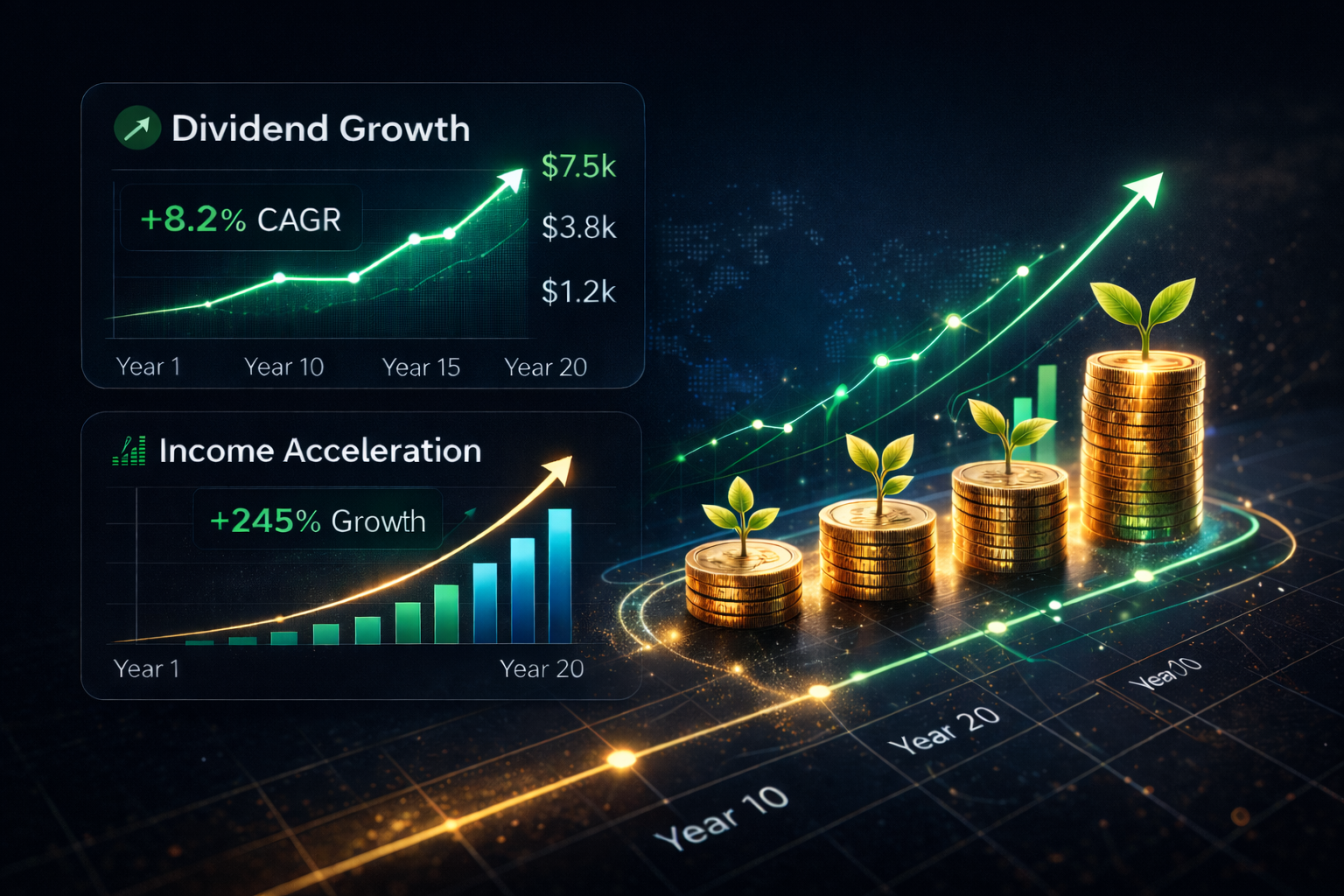 Next year the company raises the payout by 10%. The year after, another 8%. Your "yield on original cost" keeps climbing. After a decade, you might be earning 7% or 8% on the money you initially invested even if the current headline yield remains 3% for new buyers.
Let's return to Crumbs & Co. Say the bakery pays you £50 in year one. As sales grow, Jo increases your annual cheque to £55, then £60, then £68. Your personal income stream rises without you investing another pound. That's the magic.
The dividend meaning here is not a fixed number... It's a growing river of cash that outpaces inflation and funds your future.
Companies capable of this feat tend to have durable competitive advantages, strong brand names, and products people buy in rain or shine.
They can pass on cost increases to customers and generate steady cash flow. They don't need to be the most exciting firms on the planet in fact, dull can be beautiful when it comes to dividend growth.
Next year the company raises the payout by 10%. The year after, another 8%. Your "yield on original cost" keeps climbing. After a decade, you might be earning 7% or 8% on the money you initially invested even if the current headline yield remains 3% for new buyers.
Let's return to Crumbs & Co. Say the bakery pays you £50 in year one. As sales grow, Jo increases your annual cheque to £55, then £60, then £68. Your personal income stream rises without you investing another pound. That's the magic.
The dividend meaning here is not a fixed number... It's a growing river of cash that outpaces inflation and funds your future.
Companies capable of this feat tend to have durable competitive advantages, strong brand names, and products people buy in rain or shine.
They can pass on cost increases to customers and generate steady cash flow. They don't need to be the most exciting firms on the planet in fact, dull can be beautiful when it comes to dividend growth.
Total Return: The Big Picture Most Beginners Miss
A common trap is to fixate on dividend yield alone. Understanding the dividend meaning fully means embracing total return... The sum of dividend income plus capital appreciation. Picture two companies... High-Div PLC: 7% yield, but profits flat, no dividend growth, share price barely moves. Grow-Div PLC: 2.5% yield, but earnings rise 10% annually, dividend grows 8% annually, share price follows earnings upward. After ten years, which investor is wealthier? Almost certainly the one who backed Grow-Div, despite the lower starting yield. That 2.5% yield will have grown substantially, plus the share price appreciation will have boosted the total value of the holding. The investor in High-Div may have collected higher cheques early on, but their capital stagnated, and inflation ate away the purchasing power of that static income. Total return thinking turns the dividend meaning into a broader concept. Dividends aren't isolated they're part of a company's overall health. A business that can't grow its earnings over time will eventually face a challenge to maintain payouts. So when I evaluate a dividend share, I ask myself, "Will this company be bigger and more profitable in a decade?" If the answer is a confident yes, a lower yield today is a price worth paying for a richer tomorrow.The Compounding Snowball Effect: How Reinvested Dividends Multiply Your Income
You cannot fully grasp the dividend meaning until you've witnessed the snowball effect of reinvested dividends. This is where things get genuinely exciting. Suppose you invest £10,000 in a diversified portfolio yielding 4% and growing its dividend by 5% annually.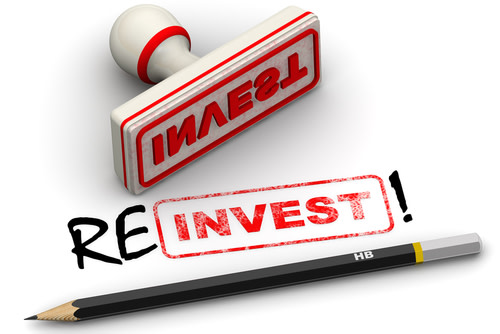 You reinvest every penny of dividend income into buying more shares. Year one, you earn £400, buy more shares, and next year you earn dividends on your original £10,000 plus the extra shares you purchased with that £400. The income keeps compounding.
By year twenty, your annual dividend income might have trebled or quadrupled all from that initial lump sum and the reinvestment snowball.
It's like a bakery that uses each month's profit to buy a new oven, which then bakes more cakes, generating more profit to buy yet another oven. The growth is not linear... It accelerates because each dividend payment buys more dividend-paying assets, which in turn produce more dividends.
This is why I tell beginners... The dividend meaning isn't about getting rich next week. It's about building a machine that hums quietly in the background, growing its payouts year after year while you focus on living your life.
Reinvesting dividends when you don't need the income is one of the most boringly beautiful strategies in finance. After a while, the income generated can cover your bills, fund projects you're interested in, or let you work less all because you understood the simple snowball.
You reinvest every penny of dividend income into buying more shares. Year one, you earn £400, buy more shares, and next year you earn dividends on your original £10,000 plus the extra shares you purchased with that £400. The income keeps compounding.
By year twenty, your annual dividend income might have trebled or quadrupled all from that initial lump sum and the reinvestment snowball.
It's like a bakery that uses each month's profit to buy a new oven, which then bakes more cakes, generating more profit to buy yet another oven. The growth is not linear... It accelerates because each dividend payment buys more dividend-paying assets, which in turn produce more dividends.
This is why I tell beginners... The dividend meaning isn't about getting rich next week. It's about building a machine that hums quietly in the background, growing its payouts year after year while you focus on living your life.
Reinvesting dividends when you don't need the income is one of the most boringly beautiful strategies in finance. After a while, the income generated can cover your bills, fund projects you're interested in, or let you work less all because you understood the simple snowball.
How Dividends Reach Your Pocket: A Simple Timeline
Part of demystifying the dividend meaning is knowing exactly when and how the cash appears. Companies follow a clear four-step dance...- Declaration Date: The board announces the dividend say, 35p per share. They also state the record date and payment date.
- Ex-Dividend Date: This is the cutoff. If you buy the share on or after this date, you won't receive the upcoming dividend. It's like the "you must be in your seat by 3pm to get a free biscuit" rule.
- Record Date: The company checks its shareholder list to see who qualifies. If you owned the share before the ex-dividend date, your name is on the list.
- Payment Date: Cash lands in your account. You celebrate with a digestive biscuit.
Dividend Traps, Tricks, And How To Dodge Them
A genuine understanding of the dividend meaning means knowing what not to buy. Here are the most common dividend traps...- The yield trap: A share price plummets, pushing the yield to 10%. Tempting, until you realise the market expects a dividend cut. If you buy before that cut, you're left holding a lower or zero income and a capital loss.
- The payout ratio catastrophe: If a company pays out 95% of its earnings as dividends, there's no buffer. One year in the red and the dividend gets slashed. I prefer payout ratios below 60% for most industries, leaving room for reinvestment and rainy-day cash.
- Special dividends masquerading as regular ones: A one-off windfall payment can temporarily inflate the yield. Don't mistake a single celebratory cheque for an ongoing income stream.
- Debt-fuelled dividends: Some companies borrow money to maintain payouts. That's like using a credit card to pay your rent sustainable only for so long.
Your First Dividend Portfolio: A Calm Blueprint
You've grasped the dividend meaning, now you want to start. Here's a level-headed approach...- Start small and diversify. Spread your capital across different sectors and geographies. Even our bakery investor wouldn't put every pound into cupcakes; a downturn in overall demand would deal a heavy blow.
- Favour quality and consistency. Look for companies with long histories of paying and ideally raising dividends. A track record of 5+ years of consecutive dividend increases is a great sign, even if yields aren't breathtaking.
- Balance yield and growth. A mix of slightly higher-yielding mature firms with lower-yielding dividend growers gives you immediate income today and a rising income tomorrow.
- Reinvest automatically. Many platforms let you automatically reinvest dividends (often called a "DRIP"). This harnesses the snowball without you lifting a finger.
- Ignore the noise. Shares will go up and down. If the dividend remains safe and growing, short-term price fluctuations don't alter the dividend meaning one bit.
A Quick Word On UK Dividend Tax (Don't Panic)
I'm a UK dividend investor, so let's talk tax without sucking the joy out of the room. As I write, the UK offers a tax-free dividend allowance £500 for the 2025/26 tax year. That means the first £500 of dividend income you receive outside an ISA (Individual Savings Account) or pension is tax-free. Inside a Stocks and Shares ISA, all dividends are completely tax-free forever. This is the gift that keeps on giving. For most beginners, using an ISA is an absolute no-brainer. You can hold up to £20,000 per tax year, and every dividend paid inside that wrapper is yours free of the taxman's grasp. Once you exceed allowances, dividends are taxed at lower rates than salary income, but the details depend on your overall income. The point is... Don't let tax be the reason you avoid dividends. With a bit of planning, you can keep the vast majority or all of your shareholder payouts out of reach of HMRC. The dividend meaning becomes even sweeter when you're not sharing it with the Exchequer.Frequently Asked Questions About Dividend Meaning
What does dividend mean in simple terms?
How often are dividends paid?
Why do companies pay dividends?
What is a good dividend yield?
Can you live off dividends?
How are dividends taxed in the UK?
What is the ex-dividend date and why does it matter?
| 💡 Key Takeaways |
|---|
| Dividend meaning is simple... It's your share of a company's profits paid in cash, no strings attached. |
| Dividends signal genuine profitability you can't fake a cash payout, which makes them a valuable trust signal. |
| Dividend yield gives a quick income measure, but it must be paired with an assessment of sustainability and growth. |
| Dividend growth investing turns modest yields into rising income streams, often outperforming static high-yielders over time. |
| Total return (dividends + capital gains) is the full picture; ignoring share price appreciation leaves money on the table. |
| The compounding snowball effect, fuelled by reinvested dividends, can quietly build life-changing wealth over decades. |
| Simple timeline knowledge declaration, ex-dividend, record, payment dates keeps you in control of your cash flow. |
| Watch for yield traps, unsustainable payout ratios, and one-off special dividends that distort the true dividend meaning. |
| Start small, stay diversified, use an ISA, and reinvest automatically for the smoothest journey to income independence. |